
An exhibit booth contractor is a specialist who handles the design, fabrication, and on-site installation of your trade show display from start to finish. Getting this right means the difference between a booth that draws crowds and one that gets ignored on the floor.
Key Takeaways
- An exhibit booth contractor manages everything from concept design to on-site teardown, so you do not have to coordinate multiple vendors.
- Choosing the wrong contractor is one of the most common reasons brands underperform at trade shows in the Philippines.
- Your booth size, budget, and brand identity should all shape how you select and brief your contractor.
- Local contractors familiar with venues like SMXCC, WTCICC, and PICC have a significant advantage over general fabricators.
- Both custom-built and rental booth options exist, and each has clear trade-offs depending on your frequency of participation.
- Starting the conversation with your contractor at least 6 to 8 weeks before the event is the minimum lead time for most builds.
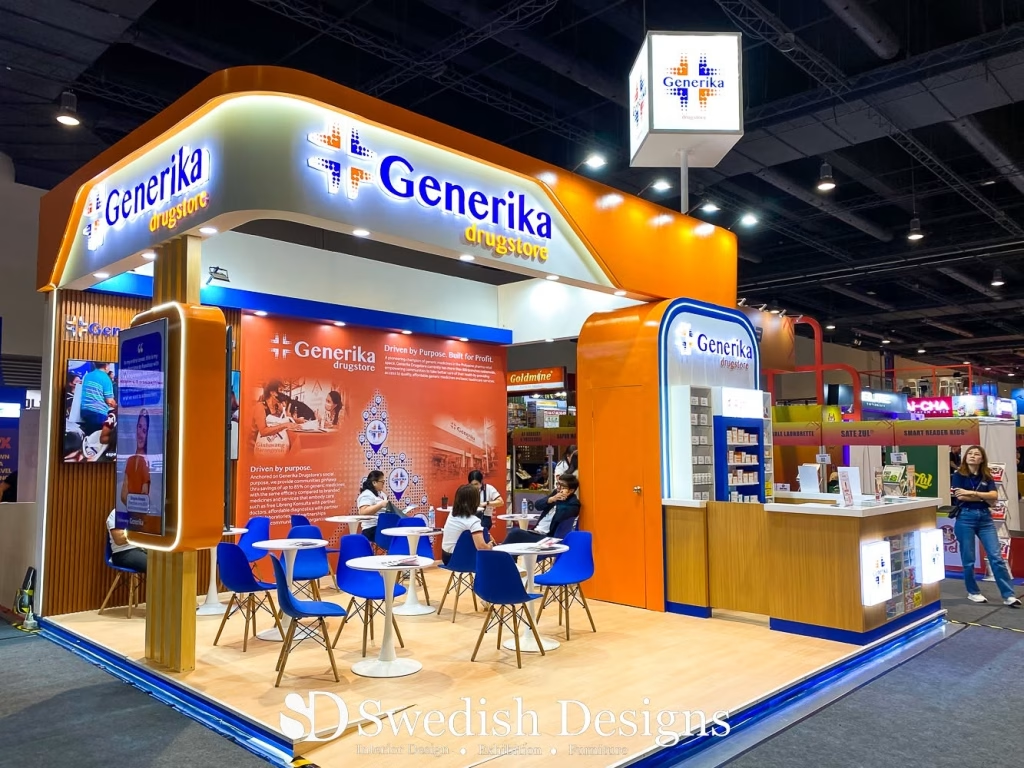
What an Exhibit Booth Contractor Actually Covers
Most exhibitors think hiring a contractor just means someone builds a frame and wraps it in fabric. The reality is far more layered than that, and understanding the full scope helps you avoid expensive gaps in your planning.
A serious exhibit booth contractor handles the entire production cycle. That starts with concept development, where they translate your brand brief into a 3D rendered design. From there, it moves into material sourcing, structural fabrication, graphic printing, electrical planning, and finally on-site installation and dismantling.
For Philippine exhibitors specifically, this also includes coordinating with venue management, following floor load requirements, and complying with fire safety clearances that venues like SMX Convention Center or WTCICC enforce strictly. These are details an experienced contractor already knows, which saves you from costly surprises.
You can read more about the full scope of exhibit design fabrication to understand how design and production decisions affect your final output.
The Difference Between a Contractor and a Supplier
A supplier sells you materials or printed panels. A contractor takes responsibility for the outcome. This distinction matters because trade show floors are unforgiving. If your booth frame arrives with missing components at 7 am on setup day, a supplier hands you a replacement part. A contractor fixes the problem.
This is why you need exhibit booth contractor is a question worth answering early rather than after your first bad experience.
How to Choose the Right Contractor for Your Booth
Not all contractors are equal, and the wrong choice costs you more than just money. A misaligned contractor can damage your brand perception at a high-visibility event.
Here are the factors that actually matter when evaluating your options:
- Portfolio depth: Look for completed projects across different booth sizes. A contractor who has handled a GREE exhibit booth 6×12 and smaller formats like a Philips exhibit booth 2×2 demonstrates flexibility across scales.
- Fabrication capability: Do they build in-house or subcontract? In-house production gives you tighter quality control and faster problem-solving.
- Venue familiarity: Contractors who have built at WORLDBEX, Manila FAME, or PhilConstruct know how to navigate the specific logistics of each venue.
- Communication style: You need a team that responds clearly and quickly during the build phase. Slow communication compounds into last-minute chaos.
- Realistic timelines: If a contractor says they can turn around a fully custom 6×9 booth in two weeks, that should raise a flag.
For a structured breakdown of what to look for, the article on how to choose exhibit booth contractor walks through the evaluation process in practical detail.
It also helps to understand common mistakes before you commit. The piece on exhibit booth in the Philippines 3 blunders you should avoid covers the pitfalls that repeat exhibitors still fall into.
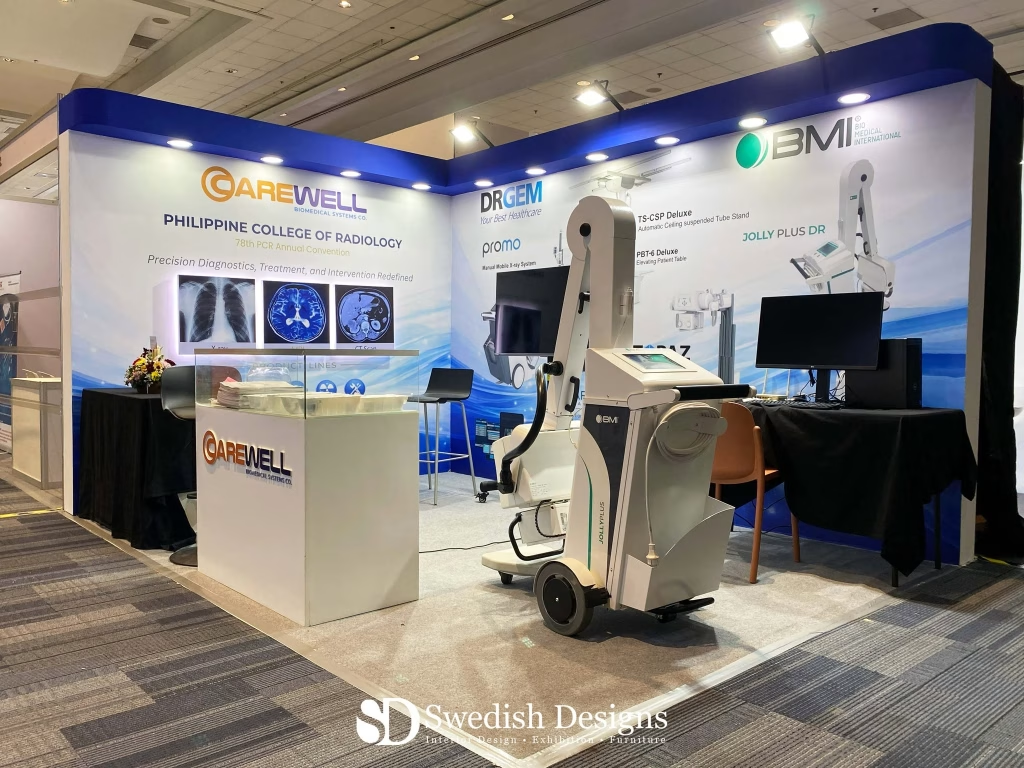
Custom Build vs. Rental: Which Makes More Sense for You
One of the most practical decisions you will make before an event is whether to go custom or rent. Both paths have clear advantages, and the right answer depends on your situation.
When Custom Makes Sense
Custom booths are built specifically for your brand. Every dimension, material, and detail is designed around your identity and your goals for that particular show. If you are participating in a flagship event like WORLDBEX or MIECEP and your brand needs to own the space, custom is the stronger choice.
Brands like Parklane Commercial corp exhibit booth at WORLDBEX and White Horse Ceramic exhibit booth at WORLDBEX chose custom builds to differentiate themselves in a crowded exhibition hall. The investment is higher, but the impact is proportionally stronger.
If you want to understand the full scope of what goes into a tailored build, reading about custom exhibition stand contractor services is a good starting point.
When Rental Makes Sense
If you are testing a new trade show, have a tight budget, or only exhibit once a year, rental is a sensible option. You get a professional setup without the full capital outlay of a custom build.
The exhibit booth rental Philippines market has grown significantly because more brands want presence without long-term storage costs. Rental booths have become more sophisticated too, with modular systems that look clean and professional.
The trade-off is customization. You work within a system rather than building from scratch, which means some brand-specific details may not be achievable.
Booth Sizes and What They Mean in Practice
Booth size shapes everything from your layout to your staffing and your engagement strategy. Philippine venues typically allocate space in standard meter-by-meter increments, and your contractor needs to design within those constraints while maximizing impact.
Here is how different sizes typically play out:
- 2×2 booths are compact and suit brands that need a presence but have a focused message. See an example from the 2×2 booth size category.
- 2×3 booths give you a bit more depth for product display or a counter. Browse the 2×3 booth size for reference.
- 2×3.5 booths are a less common but useful size for narrow floor layouts. The 2×3 5 category shows how this translates in practice.
- Larger formats like 3×6, 6×9, and 6×12 allow for full product demonstrations, meeting areas, and stronger visual presence from a distance.
Looking at real finished projects helps ground your expectations. The Navnautics exhibit booth 3×6 and Rancho Bernardo exhibit booth 3×6 show how a mid-sized footprint can be used effectively, while the Chint exhibit booth 6×9 demonstrates what a larger floor presence looks like.
Smaller brands should not feel limited either. Projects like the Darwinbox exhibit booth 2×3, The Hood exhibit booth 2×3, and Avli Biocare exhibit booth 2×6 prove that a well-designed small booth punches well above its size.
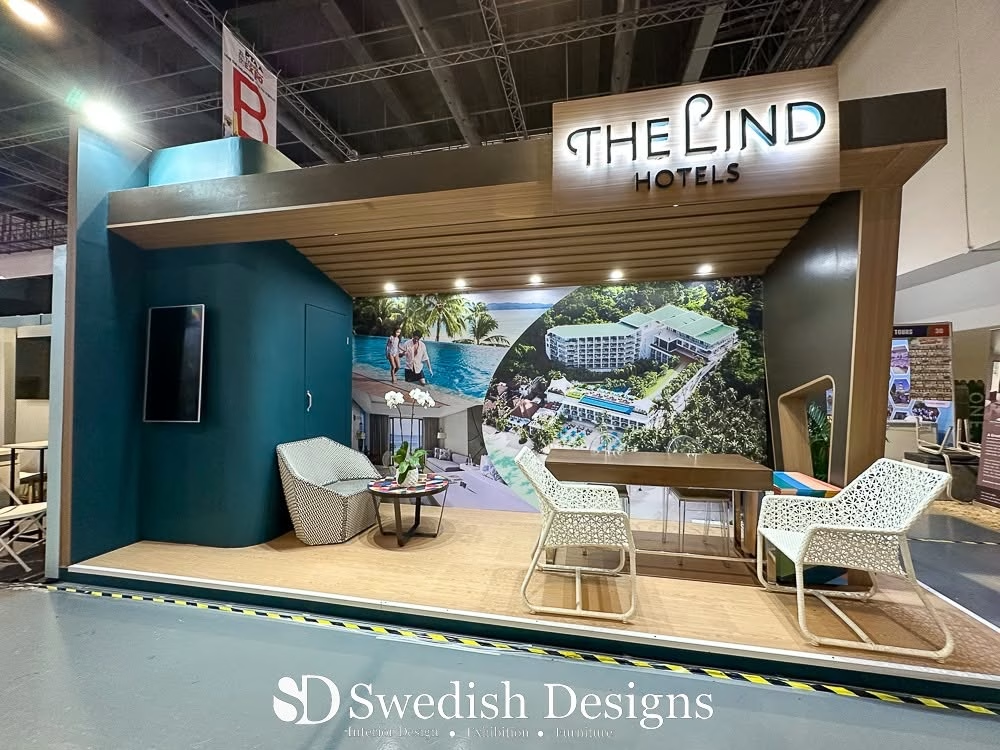
What the Production Process Looks Like End to End
Understanding the timeline and steps in a booth build helps you set realistic expectations and brief your contractor more effectively.
Here is a general sequence for a custom build:
- Brief and discovery: You share your brand guidelines, booth dimensions, show dates, and goals.
- Concept design: The contractor produces 3D renderings for your review and approval.
- Revisions: You refine until the design matches your vision.
- Material sourcing and fabrication: The physical build begins. This is where in-house exhibit booth production capability becomes a quality advantage.
- Graphic production: Panels, signage, and branded elements are printed and finished.
- Pre-event quality check: Ideally, the booth is partially assembled at the contractor’s facility before going to the venue.
- On-site installation: The team builds at the venue within the permitted setup window.
- Event support and teardown: A good contractor stays available during the event and handles dismantling efficiently.
You can see examples of how this process produces finished results in the exhibit booth design and fabrication portfolio work.
Things to Know
- Lead time is non-negotiable. For custom builds, 6 to 8 weeks is the realistic minimum. Rushing a build increases error rates and stress for everyone.
- Venue rules differ. SMX Convention Center, World Trade Center Metro Manila, and P.I.C.C. each have their own setup windows, material restrictions, and clearance requirements. Your contractor should already know these.
- Electrical planning matters early. If you need demo screens, LED walls, or product lighting, this has to be factored into the design before fabrication starts, not after.
- Teardown is part of the service. Some contractors charge separately for dismantling. Confirm this before signing.
- Storage is often overlooked. If you plan to reuse a custom booth, ask your contractor about storage arrangements between shows.
- Permits and logistics coordination can make or break your setup day. A contractor familiar with the Philippine exhibition circuit already has relationships with venue logistics teams.
Choosing a Long-Term Partner, Not Just a One-Time Vendor
The best exhibitors treat their contractor as a long-term strategic partner. When your contractor understands your brand across multiple events, the briefs get tighter, the builds get better, and the turnaround gets faster.
For brands that participate in multiple shows a year, having a dedicated philippine exhibit booth partner relationship removes a huge amount of repetitive coordination work. Instead of starting from scratch each time, you build on a body of shared work and institutional knowledge.
You can explore what this kind of partnership looks like by reading about becoming an exhibit booth contractor partner philippines.
The portfolio of a seasoned contractor tells you a lot about their range. Look for diversity in industries, booth sizes, and event types. A contractor who has built for healthcare, maritime, ceramics, and technology companies, such as F Plus Healthcare Technologies, Josefa Slipways, and Windmoller Holscher, has the adaptability to handle your specific needs.
For detailed guidance on evaluating providers, the article on how to choose exhibition stand builders covers what separates reliable builders from unreliable ones.
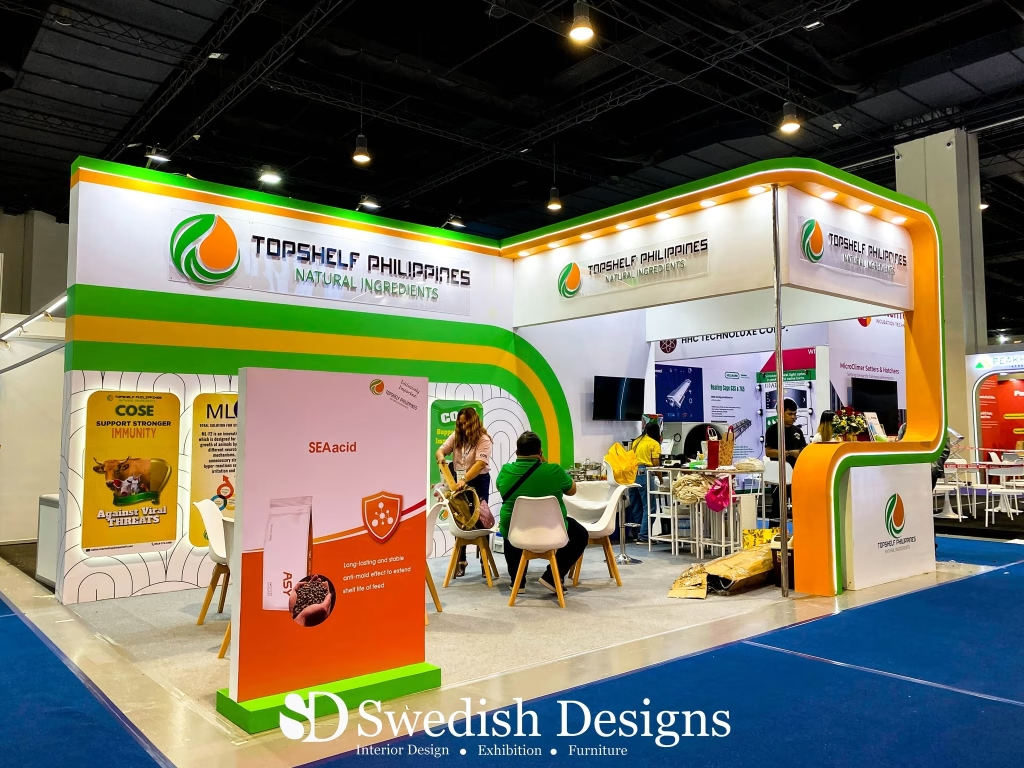
Ready to Brief Your Next Booth?
If you have an upcoming trade show and need a contractor who can handle the full process, the first step is a direct conversation. Bring your event date, your floor space allocation, and any existing brand materials. That is enough to start a productive briefing.
Visit the exhibition stand trade show display page to see what a full-service contractor can deliver, or go to Contact Us to start the conversation today. You can also visit about Swedish Designs to understand the team behind the builds, or browse the blog for more articles covering the exhibit production process.
If you are looking at how international clients work with a local team in Manila, the Philippine execution partner exhibit booths page explains how that collaboration works in practice.
Frequently Asked Questions
Q: How far in advance should I contact an exhibit booth contractor before my event?
For custom builds, reaching out at least 6 to 8 weeks before your event date is the standard recommendation.
Smaller or simpler booths may need less time, but any build involving custom fabrication, complex lighting, or large graphics requires that minimum runway. Contacting a contractor late usually means compromising on design quality or paying premium rush fees.
Q: What is the typical cost range for a custom trade show booth in the Philippines?
Costs vary widely depending on size, materials, and complexity, but a basic custom 3×3 booth typically starts around PHP 100,000 to PHP 150,000, while larger booths can range into the hundreds of thousands.
Your final cost depends on the materials chosen, the number of graphic panels, lighting requirements, and whether storage and reuse are part of the plan. Rental options are available for tighter budgets.
Q: Can I reuse a custom booth for multiple events?
Yes, most custom booths are designed with reuse in mind, especially modular builds.
Your contractor should be able to advise on which materials and structures hold up well across multiple setups. Some components, like fabric graphics, are easily replaced between events while the structural frame stays intact.
Q: What happens if something breaks or goes wrong during setup?
A reputable contractor has on-site staff during setup who can address structural or graphic issues as they arise.
This is one of the key advantages of hiring a full-service contractor rather than a supplier. They own the outcome and are accountable for resolving problems before the show opens.
Q: What is the difference between a portable booth and a custom-built exhibit?
A portable booth uses pre-manufactured modular components that can be assembled quickly, while a custom-built exhibit is fabricated specifically to match your brand design and dimensions.
Portable booths are cost-effective and easy to transport. Custom builds offer higher visual impact and brand specificity. The right choice depends on your budget, frequency of participation, and brand positioning goals.
The Bottom Line on Exhibit Booth Contractors
Hiring the right exhibit booth contractor is not just a logistical decision. It is a brand decision. The booth you present at a trade show shapes how thousands of potential clients and partners perceive your company in the space of a few days. That impression is worth investing in properly.
Start by defining your goals clearly, then find a contractor whose portfolio, capabilities, and communication style match what you need. Projects like CIBES exhibit booth worldbex, Taganito HPAL exhibit booth 6×4, Nautilus Pacific Maritime Training Center exhibit booth 3×3, Materials Solutions exhibit booth 3×6, CELEASCO exhibit booth 3×6, and GREE exhibit booth 3×6 all reflect what happens when a contractor and client are properly aligned. That alignment starts with a clear brief and an honest conversation. Start that conversation early, and your next trade show will be significantly easier to execute.